
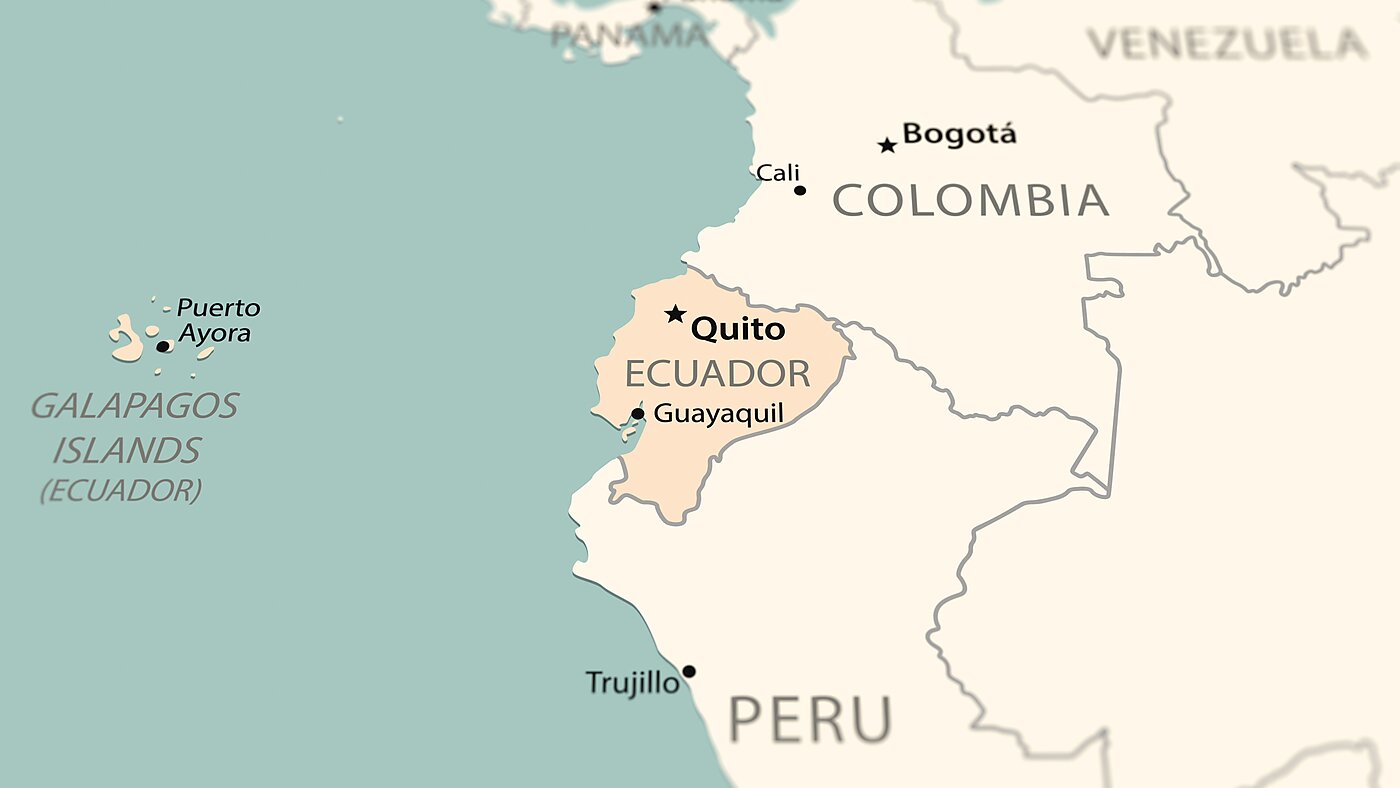
Today in the Wall Street Journal, economist Judy Shelton suggests that Latin American countries adopt the US dollar. She weighs in on the pros and cons of dollarization as a regional phenomenon. Ms. Shelton argues that “Greater financial stability and rapid development in emerging-market nations within our hemisphere could serve US national interests as shared prosperity strengthens political alliances.” And Ecuador, one of the United States’s closest allies in South America, is a case in point.
This month marks 26 years since dollarization came into effect in Ecuador. Since adopting the dollar on January 9, 2000, the country has enjoyed the longest period of monetary stability in its republican history. Ecuador’s dollarization is a success story little known outside the country and little appreciated within it: economic stability coexisting with high political volatility.
The deepest financial crisis in Ecuador’s republican history occurred in 1998–1999 and can be traced back to a fateful decision made by President Oswaldo Hurtado in 1983: the bailout of banks through the assumption of private external debt by the government, thus expanding the role of the Central Bank of Ecuador (BCE) as lender of last resort. This led to a massive transfer of wealth to bank owners. Dollarization eliminated the perverse incentives that affected the behavior of bankers and politicians, decoupling public finances from the private financial system.

When the BCE had the capacity to carry out monetary policy, workers’ wages bore the cost of the adjustments. The monthly minimum wage fell from $144 in 1980 to $8.4 in 1999. After dollarization, it experienced a continuous increase: from $56.70 in 2000 to $536.6 in 2024.
With dollarization, wages could no longer be diluted via inflation. Average annual inflation between 1975 and 1999 was 31.4%. Ecuadorians lacked an incentive to save in that environment of persistently high inflation. After dollarization, average annual inflation fell to 3.4% (2000–2024).
As incomes rose and were not eroded by inflation, the country experienced a remarkable and sustained reduction in poverty: it fell from 64% of the population in 2000 to 21% in 2025. All this even though there have been no structural reforms to promote growth; on the contrary, there were significant setbacks during the presidency of Rafael Correa (2007–2017).
Dollarization also transformed the financial system. Once the national currency (the sucre) was eliminated, bank deposits recovered almost immediately. Instead of the massive withdrawal of deposits that many economists had predicted due to a supposed lack of sufficient dollars, deposits increased from 9.4% of GDP to 18.7% during the first year of dollarization and continued to grow almost uninterrupted during the following quarter-century, reaching 45% of GDP in June 2025.
The increase in deposits, coupled with the collapse of inflation and the elimination of exchange rate risk, all contributed to lower interest rates: the average lending rate fell from 62% in 1999 to around 8% in 2025.
The reform allowed for the development of a financial market that did not exist before, from so-called “easy installments” for consumer goods, such as appliances, to the emergence of a mortgage market. We also came to understand, at least tacitly, that economic progress depends on greater productivity and not on the existence of a sovereign monetary policy.
This post is based on an article that was originally published in El Universo (Ecuador) on January 16, 2026.