

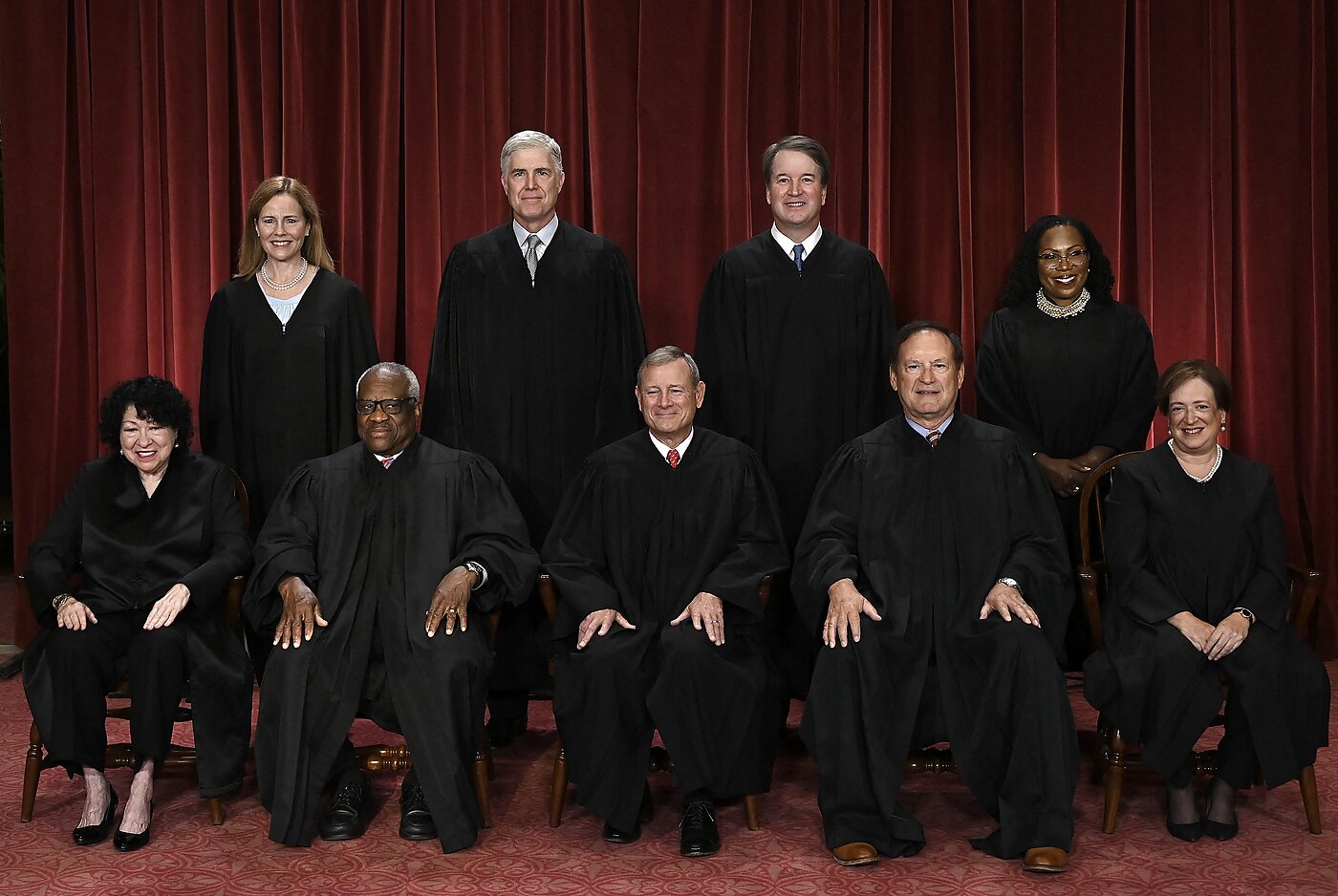
On February 20, 2026, the Supreme Court issued a landmark 6–3 ruling in Learning Resources, Inc. v. Trump, namely that the International Emergency Economic Powers Act does not authorize the president to impose tariffs.
The decision struck down the broadest assertion of executive trade power in modern American history. The IEEPA tariffs had pushed import taxes to their highest levels since the 1930s and cost every American household an estimated $1,000 in 2025 alone.
Cato scholars have been at the center of this debate from the start—in the courts, the press, and Congress. Below is a video and links to their analyses before and after the ruling.
Cato IEEPA Resource Page. The best place to start is Cato’s dedicated IEEPA resource page, which collects research, legal analysis, data, and commentary on the tariffs and the Supreme Court case. It includes data showing that IEEPA tariffs accounted for more than 60 percent of all tariff revenue collected by the federal government in fiscal year 2025.
Analyses by Cato Scholars
“It’s the End of the Beginning of the Tariff War.” Cato scholar Scott Lincicome welcomes the ruling as an important victory for constitutional governance but warns that the tariff fights are not over. The administration moved within hours to impose new levies under Section 122 of the Trade Act of 1974 and to launch fresh Section 301 investigations. The real long-term solution, Lincicome argues, requires Congress to reclaim its constitutional authority over trade policy. (Scott Lincicome is the vice president of general economics and Cato’s Herbert A. Stiefel Center for Trade Policy Studies.)
“The Supreme Court Spurns a Presidential Power Grab.” Law Professor Ilya Somin argues that the ruling is a decisive rejection of an unconstitutional power grab—but that a critical and unresolved question remains: how much deference courts should give to presidential invocations of sweeping emergency powers. That question will shape cases well beyond tariffs. (Ilya Somin is the B. Kenneth Simon Chair in Constitutional Studies at the Cato Institute, and a professor of law at George Mason University. He was co-counsel for the plaintiffs in VOS Selections, Inc. v. Trump, one of the tariff cases decided by the Supreme Court.)
“How the Supreme Court Spared America.” In this piece, Ilya Somin examines the economic stakes of the ruling and the dangers that would have followed had the administration’s unlimited tariff theory prevailed—effectively granting the president power to tax Americans without congressional authorization.
“The Supreme Court Got It Right on IEEPA—But Don’t Pop the Champagne Yet.” Cato scholar Clark Packard explains why the ruling, while welcome, does not end unilateral trade policy. The administration has already turned to lesser-known statutes, Section 122 and Section 338 of the Tariff Act of 1930, which could reproduce much of the IEEPA tariff regime. Until Congress acts to reclaim its authority, the risk of arbitrary tariffs will remain. (Clark Packard is a research fellow in the Herbert A. Stiefel Center for Trade Policy Studies.)
“What the SCOTUS Tariff Decision Means for Fiscal Policy in Four Charts.” Cato scholar Adam Michel puts the ruling’s fiscal consequences in context. The IEEPA tariffs generated over $264 billion in total tariff revenue in 2025, more than triple the Biden-era baseline, but they also offset a substantial share of the administration’s own tax cuts, with lower-income households facing a net tax increase. Relief from IEEPA tariffs will help, but much depends on what replaces them. (Adam N. Michel is director of tax policy studies at the Cato Institute, where he focuses on analyzing the economic and budgetary effects of taxation in the United States.)
More Information
The Cato Institute has been engaged on IEEPA tariffs across every front, including economic research, legal analysis, congressional testimony, and public education. Visit the IEEPA resource page for the full body of work, including an amicus brief filed by Cato scholars in the Supreme Court case, data tools, and additional commentary.